
Why the relationships we build in childhood often shape the way we connect as adults
Introduction
Have you ever wondered why some people trust others easily while some struggle with closeness? Why do some feel secure in relationships while others fear being left behind?
Attachment Theory helps answer these questions. It explains how our earliest relationships influence the way we think, feel, and connect with others throughout life.
The good news is that attachment is not a life sentence. Understanding your attachment style can help you build healthier and stronger relationships at any age.
What Is Attachment Theory?
Attachment Theory is a psychological theory that explains how emotional bonds develop between children and their caregivers.
When children receive consistent care, comfort, and protection, they usually develop a sense of safety. This becomes the foundation for future relationships.
If care is inconsistent, distant, or unpredictable, children may develop different ways of coping that continue into adulthood.
Simply put, early experiences teach the brain what to expect from relationships.
Who Developed Attachment Theory?
Attachment Theory was first developed by psychologist John Bowlby during the 1950s.
Later, psychologist Mary Ainsworth expanded the theory through her famous “Strange Situation” study, which observed how young children reacted when separated from and reunited with their caregivers.
Their research helped identify different attachment styles that psychologists still use today.
Why Attachment Matters
Humans are naturally social beings.
Feeling emotionally connected provides comfort, confidence, and security.
Healthy attachment helps people:
- Build trust
- Manage emotions
- Develop confidence
- Handle stress better
- Form lasting relationships
- Feel supported during difficult times
Attachment affects much more than romantic relationships. It also influences friendships, parenting, teamwork, and communication.
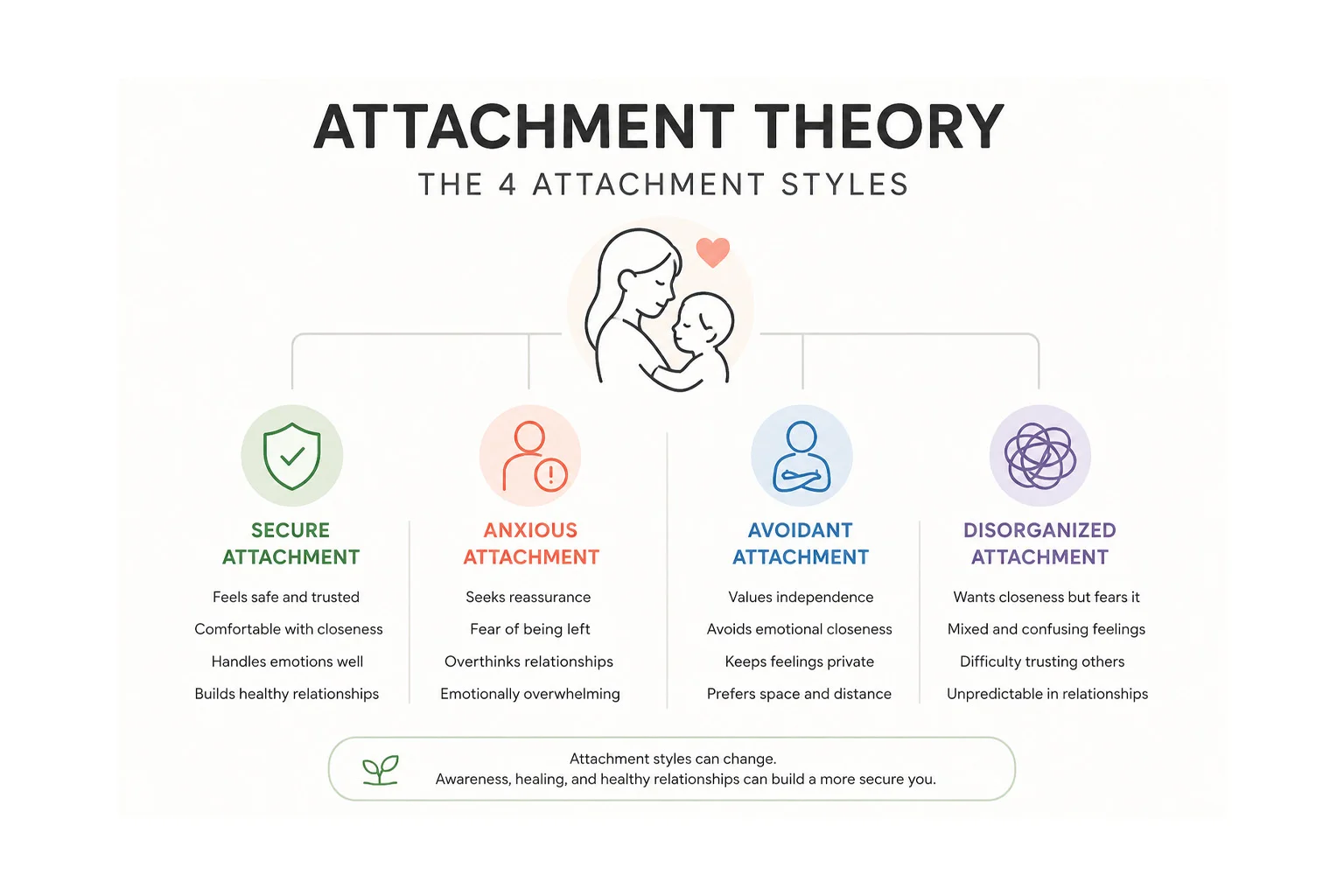
The Four Main Attachment Styles
Secure Attachment
People with secure attachment usually:
- Trust others
- Feel comfortable with closeness
- Communicate openly
- Recover from conflict more easily
- Balance independence with connection
This style often develops when caregivers consistently respond with warmth and support.
Anxious Attachment
People with anxious attachment may:
- Worry about being rejected
- Need frequent reassurance
- Overthink conversations
- Fear abandonment
- Become emotionally overwhelmed during conflict
Their early experiences may have been loving at times but inconsistent.
Avoidant Attachment
People with avoidant attachment often:
- Value independence very highly
- Find emotional closeness uncomfortable
- Hide vulnerable feelings
- Pull away during emotional situations
- Prefer solving problems alone
This style can develop when emotional needs were regularly ignored or dismissed.
Disorganized Attachment
People with disorganized attachment may:
- Want closeness but also fear it
- Experience mixed emotions in relationships
- Struggle with trust
- Feel confused during emotional situations
- Have unpredictable relationship patterns
Researchers believe this style often develops when caregivers were both a source of comfort and fear.
Can Attachment Style Change?
Yes.
Many psychologists now believe attachment can become more secure over time.
Healthy friendships, supportive partners, positive life experiences, self-awareness, and personal growth can all help people build stronger emotional patterns.
The brain continues learning throughout life.
That means healthier relationships today can reshape expectations for tomorrow.
Signs You May Have a Secure Attachment
You may have a secure attachment if you:
- Feel comfortable asking for help
- Trust people gradually
- Respect healthy boundaries
- Communicate honestly
- Handle disagreements without panic
- Feel confident both alone and with others
No one is perfect all the time, but these patterns often appear more frequently.
How Attachment Influences Everyday Life
Attachment affects many everyday situations.
Friendships
People with secure attachment usually find it easier to build lasting friendships.
Romantic Relationships
Attachment influences trust, communication, and how couples handle disagreements.
Parenting
Parents often pass relationship patterns to the next generation, although positive changes are always possible.
Workplace Relationships
Attachment can affect teamwork, leadership, confidence, and how people respond to feedback.
Can Parents Encourage Secure Attachment?
Yes.
Children benefit when caregivers:
- Respond consistently
- Listen carefully
- Offer comfort during difficult moments
- Encourage independence while providing support
- Create a safe emotional environment
Small daily interactions often have a bigger impact than occasional grand gestures.
Common Myths About Attachment Theory
Myth 1: Your attachment style never changes.
False.
People can develop healthier attachment patterns throughout life.
Myth 2: Only children have attachment styles.
False.
Attachment continues influencing adult relationships as well.
Myth 3: One difficult experience determines everything.
False.
Relationships are shaped by many experiences over time.
Myth 4: Secure people never have relationship problems.
False.
Everyone experiences conflict. Secure attachment simply helps people recover more effectively.
Key Takeaways
- Attachment Theory explains how early relationships shape future connections.
- Four attachment styles describe common relationship patterns.
- Secure attachment supports trust and emotional resilience.
- Attachment can continue changing throughout life.
- Understanding your attachment style can improve communication and relationships.
Final Thoughts
Attachment Theory reminds us that our earliest relationships often leave lasting impressions, but they do not define our future.
Every healthy conversation, supportive friendship, and positive relationship gives the brain another opportunity to build trust.
Understanding attachment is not about blaming the past. It is about creating healthier relationships in the present.
The more we understand how connection shapes behavior, the better equipped we are to build stronger families, friendships, workplaces, and communities.
Frequently Asked Questions
What is Attachment Theory in simple words?
Attachment Theory explains how early relationships with caregivers influence the way people build relationships later in life.
Who created Attachment Theory?
Psychologist John Bowlby developed the theory, and Mary Ainsworth expanded it through important research studies.
What are the four attachment styles?
The four attachment styles are secure, anxious, avoidant, and disorganized.
Can adults change their attachment style?
Yes. Positive relationships, self-awareness, and personal growth can help people develop more secure attachment patterns.
Why is Attachment Theory important?
It helps explain trust, communication, emotional connection, and relationship behavior throughout life.

Leave a Comment