
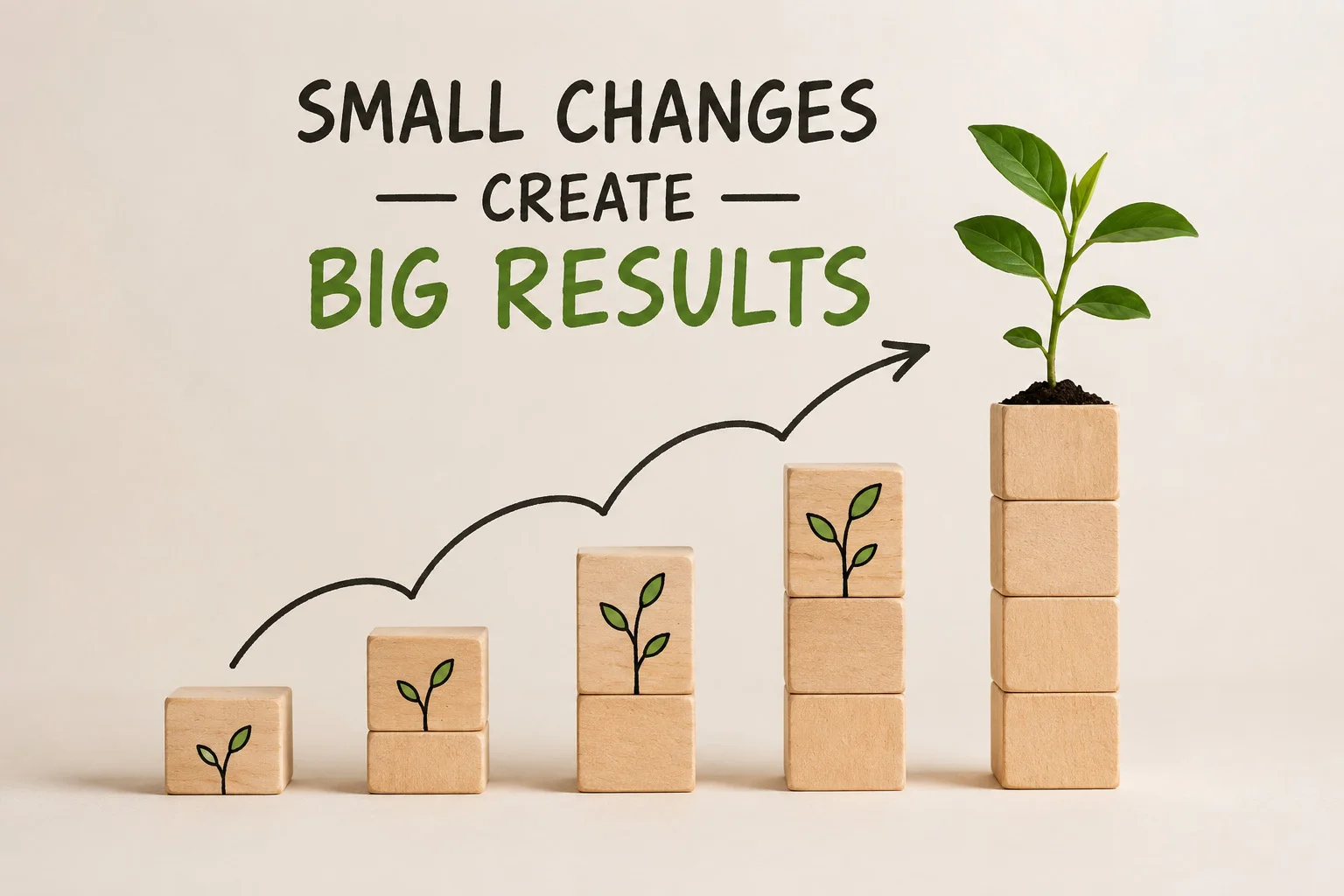
Tiny Habits Can Transform Your Life
Most people believe success comes from making big changes. They wait for the perfect time to start exercising, saving money, learning a new skill, or improving their relationships.
But psychology tells a different story.
Real and lasting change often begins with the smallest actions. A habit that takes just one or two minutes each day can eventually lead to life-changing results. These tiny improvements may seem unimportant at first, but they grow over time.
The secret is consistency, not intensity.
Why Do Small Changes Matter So Much?
The human brain prefers routines over sudden change.
Large goals often feel overwhelming because they require a lot of energy, planning, and motivation. When something feels difficult, the brain naturally looks for easier options.
Small actions are different.
They require very little effort, making it easier to start. Once a behavior becomes a habit, the brain performs it with much less mental effort.
This is one reason why tiny habits are often more successful than dramatic life changes.
“Small steps repeated every day lead to extraordinary destinations.”
The Psychology Behind Tiny Improvements
Psychologists have found that repeated behaviors strengthen neural pathways in the brain.
Every time a person repeats a positive action, the brain becomes slightly more efficient at performing it again. Over time, the behavior becomes automatic.
This process is called habit formation.
Instead of relying on willpower every day, the brain begins working on autopilot.
That is why brushing your teeth, locking your front door, or checking your phone feels almost effortless. These actions have become deeply connected to your daily routine.
Positive habits can develop in exactly the same way.
The Power of the Compound Effect
Imagine improving by just 1% every day.
One day may not seem different.
One week may show only a tiny improvement.
But after months or years, those small gains add up in surprising ways.
Just like money grows through compound interest, positive habits grow through repeated actions.
Small efforts become large achievements because they build upon each other.
Why Big Changes Often Fail
Many people start with excitement.
They decide to exercise every day, wake up at 5 a.m., stop eating unhealthy food, read two books each week, and completely change their lifestyle.
The problem is that these goals require too much energy at once.
When motivation drops, the new routine becomes difficult to maintain.
Eventually, many people return to their old habits.
Small changes avoid this cycle because they never feel overwhelming.
Examples of Tiny Changes That Make a Big Difference
Here are a few simple habits that can create meaningful results over time.
Read One Page Every Day
Reading a single page may take less than two minutes.
Over one year, that can become several books filled with new knowledge.
Walk for Five Minutes
A short daily walk improves movement, supports physical health, and often boosts mood.
Five minutes frequently turns into ten without feeling difficult.
Save a Small Amount Regularly
Saving a little money each week may not seem impressive.
However, consistency builds financial security over time.
Practice Gratitude
Writing down one thing to be grateful for each day helps train the brain to notice positive experiences instead of only focusing on problems.
Learn One New Fact
Learning just one useful fact every day expands knowledge much faster than most people expect.
Small Wins Build Confidence
Every completed action sends an important message to the brain.
“I can do this.”
These small successes increase confidence.
Psychologists sometimes call this building self-efficacy, which is the belief that a person is capable of achieving goals.
The more small wins someone experiences, the more willing they become to take on bigger challenges.
Confidence grows through action, not just positive thinking.
Habits Shape Identity
Many people focus only on outcomes.
“I want to lose weight.”
“I want to write a book.”
“I want to become successful.”
A more powerful approach is to focus on identity.
Instead of asking, “What do I want to achieve?”
Ask,
“What kind of person do I want to become?”
Each small habit becomes evidence of that identity.
Reading every day supports the identity of a learner.
Exercising regularly supports the identity of a healthy person.
Helping others supports the identity of a kind person.
Identity grows through repeated actions.
Why Patience Is So Important
One reason people quit is that they expect immediate results.
Real change often happens quietly.
The first few weeks may show little progress.
Then something interesting happens.
The habits become easier.
The results become visible.
The progress begins to accelerate.
Patience allows small improvements enough time to create meaningful change.
“Success is rarely one big moment. It is usually thousands of small decisions made consistently.”
Simple Ways to Start Today
You do not need to change your entire life overnight.
Instead, choose one small action.
Try one of these ideas:
- Drink one extra glass of water.
- Read one page before bed.
- Spend five minutes stretching.
- Write one positive thought in a notebook.
- Put away your phone during one meal each day.
- Learn one new word.
- Smile at one person.
- Take three slow, deep breaths before starting work.
These actions may seem small, but repeating them every day can create lasting improvements.
Final Thoughts
Big results rarely appear overnight.
Behind nearly every success story are hundreds of small actions repeated consistently over time.
Psychology reminds us that lasting transformation does not require dramatic changes. It requires simple habits that are easy to repeat.
The smallest step taken today is often more valuable than the biggest plan that never begins.
When tiny actions become daily habits, they quietly shape thoughts, behavior, and eventually, an entire life.

Leave a Comment