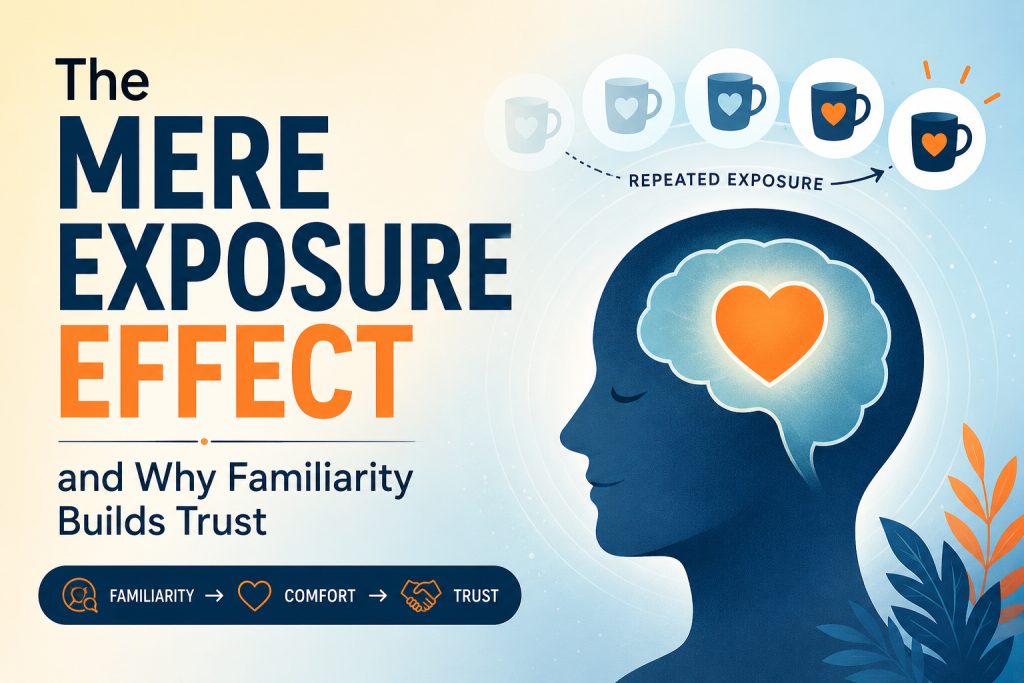
Have you ever noticed that a song you disliked at first suddenly became your favorite after hearing it several times? Or that a brand you’ve seen repeatedly feels more trustworthy,...
Have you ever wondered why people often follow a crowd, remember unfinished tasks better than completed ones, or value something more simply because they own it? Human behavior is shaped...
Human behavior continues to be one of the most fascinating areas of scientific study. Advances in neuroscience, cognitive science, behavioral economics, and social psychology have provided deeper insights into how...
What makes certain phrases unforgettable? Some phrases remain memorable long after they are heard. Short expressions, slogans, and catchphrases often become easy to recall because they are simple, repetitive, and...
Why do familiar ideas often feel more believable? Familiarity has a strong influence on how information is perceived. When an idea is encountered repeatedly, it becomes easier to process. This...
What is Positive Psychology 2.0? Positive Psychology 2.0 is an advanced framework in psychology that focuses on achieving well-being by integrating both positive and negative human experiences. Unlike earlier approaches...
What does seeking validation mean in psychology Seeking validation refers to the tendency to look for approval, recognition, or affirmation from others to confirm one’s thoughts, feelings, or behaviors. In...
What does psychology aim to explain? Psychology seeks to explain observable behavior, cognitive processes, and measurable patterns of interaction between individuals and their environments. It studies how people perceive, learn,...
Why do emotions feel more intense at night? Emotions often feel stronger during nighttime hours due to a combination of reduced external stimulation, increased cognitive introspection, and shifts in the...
What is emotional timing in psychology? Emotional timing refers to the way emotions rise, peak, and decline in predictable patterns throughout the day, week, and specific life situations. These patterns...
The Silent Strategy of Success In an age of constant communication, the impulse to announce every plan, decision, or idea can be overwhelming. Yet, psychological research suggests that silence before...
Every day, we make countless decisions—from what to eat for breakfast to how to respond in a meeting. While we’d like to believe these choices are rational, they are often...
Have you ever wondered why you instantly like or dislike someone within seconds of meeting them? Or why that job interview felt doomed from the moment you walked in? The...